Plant Nutrient Deficiency Symptoms
Boron
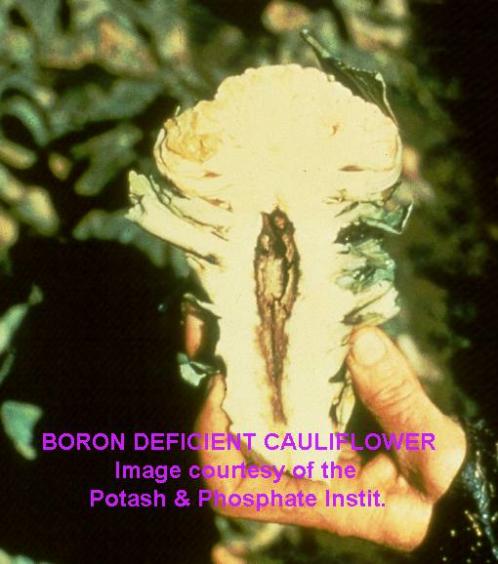
Boron deficiency on cauliflower
Note internal rot. This type of symptom often occurs at the plant growing point.
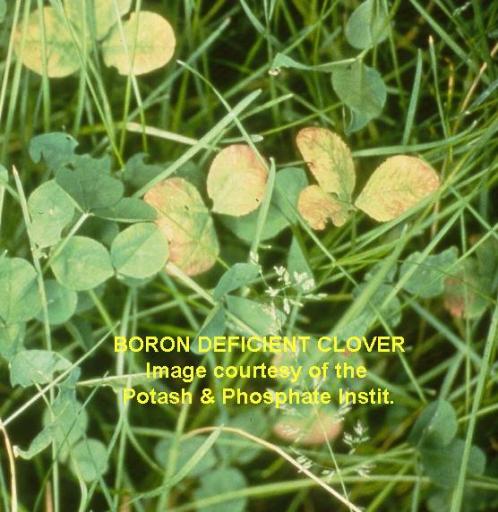
Boron deficiency on clover
Note reddish color of younger leaves.
Calcium
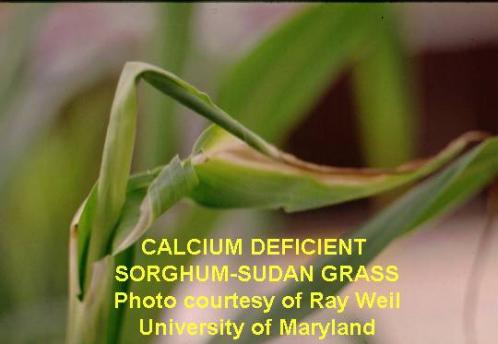
Calcium deficiency on Sorghum-Sudangrass
Note that new leaves stick together and fail to properly unfold. Associated with very acid soil.
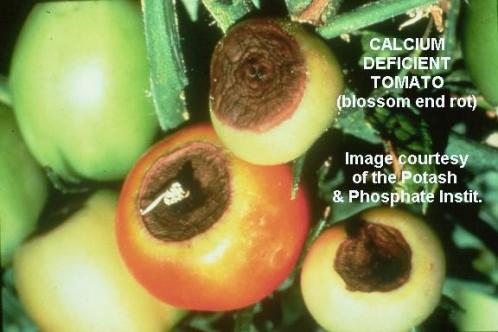
Calcium deficiency on tomato
Note rot on the end of the fruit to which the blossom was attached. Similar symptoms occur in melons and are associated with lack of Ca and uneven moisture.
Chloride
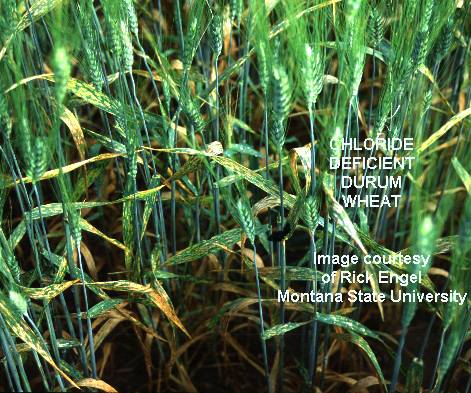
Chloride deficiency on durum wheat
This is one of the few confirmed instances of Cl deficiency in field grown plants.
Copper
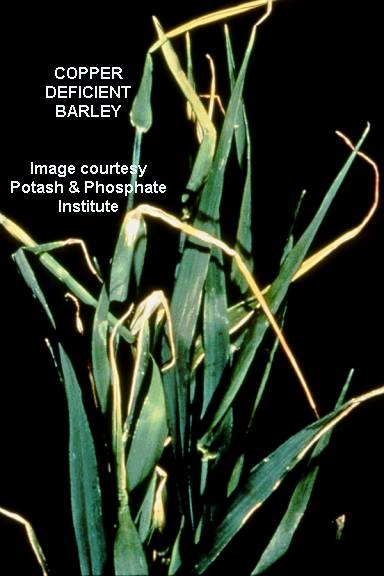
Copper deficiency in barley
Note whitish leaf tips poorly unfolded. Most common on acid sandy soils.
Iron
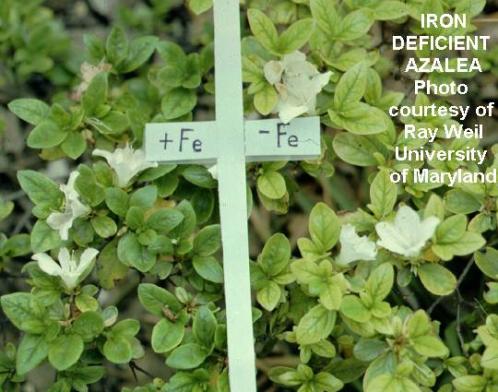
Iron deficiency on azalea
Note Interveinal chlorosis on the youngest leaves. This symptom disappears within a day or two if leaves are sprayed with iron solution.
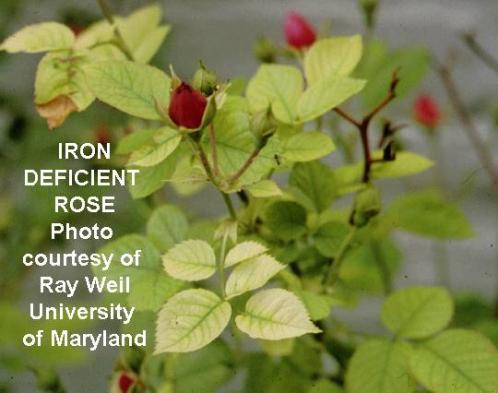
Iron deficiency on rose
Iron deficiency is usually associated with higher than optimum soil pH.
Magnesium
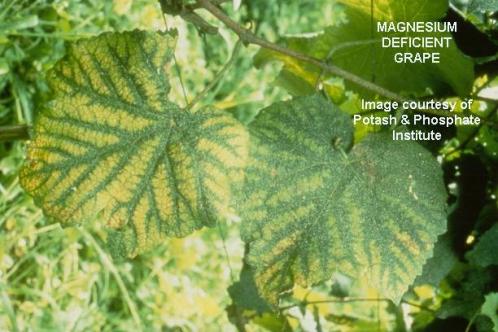
Magnesium deficiency on grape
Note Interveinal chlorosis on older leaves.
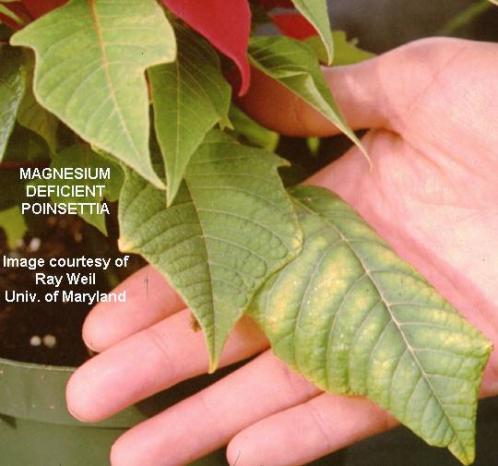
Magnesium deficiency on poinsettia
Note Interveinal chlorosis on oldest leaves.
Manganese
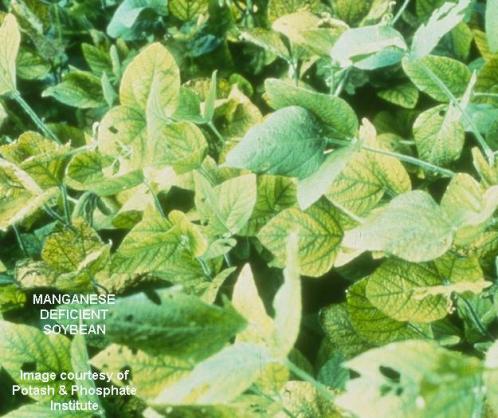
Manganese deficiency on soybean
Note Interveinal chlorosis on younger leaves. Usually associated with higher than optimum soil pH.
Molybdenum
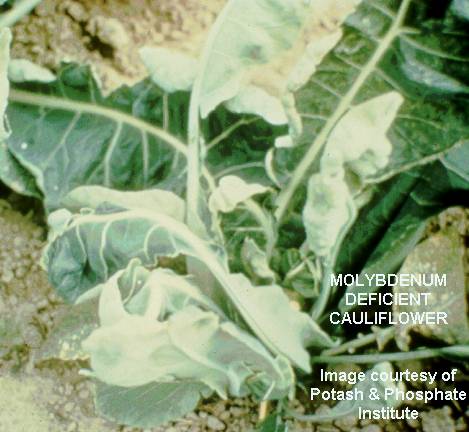
Molybdenum deficiency on cauliflower
Note "whiptail"-like elongated, misshapen central leaves. Usually associated with lower than optimal soil pH.
Nitrogen
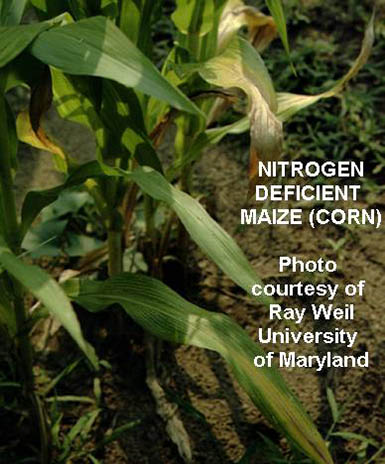
Nitrogen deficiency on corn (maize)
ote chlorosis of the oldest leaves, starting at the tip and proceeding down the midrib.
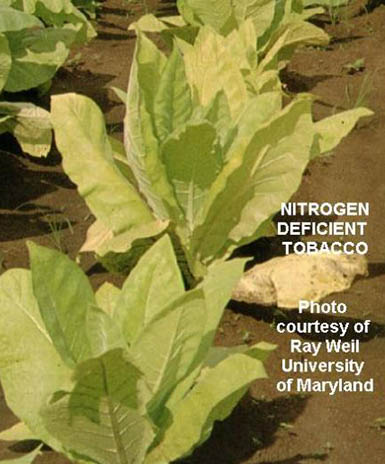
Nitrogen deficiency on tobacco
Note chlorosis (yellowing) of leaves, most pronounced on the oldest leaves.
Phosphorus
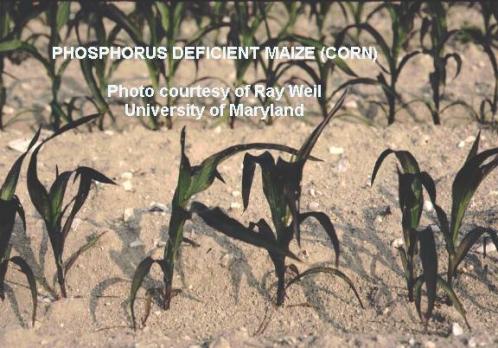
Phosphorus deficiency on corn (maize)
Note stunted stature and purple coloring of leaf edges and lower stem.
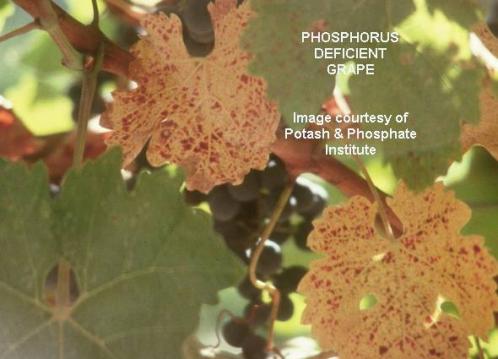
Phosphorus deficiency on grapes
Note reddish/purple coloring of oldest leaves.
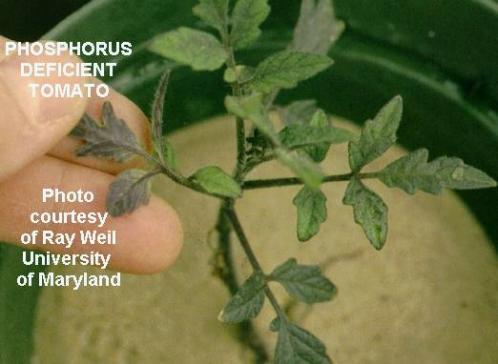
Phosphorus deficiency on tomato seedling
Note purpling, especially on underside of leaves and veins.
Potassium
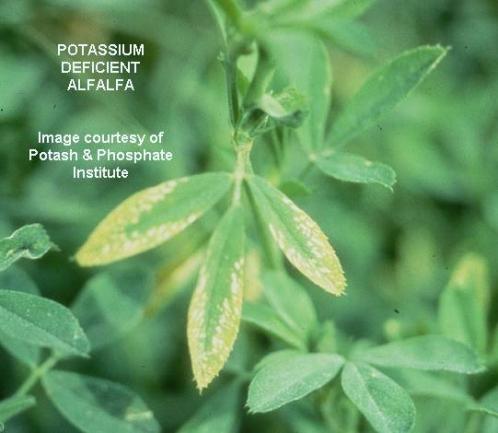
Potassium deficiency on alfalfa
Note white speckles of necrotic tissue near tip and edges of older leaves.
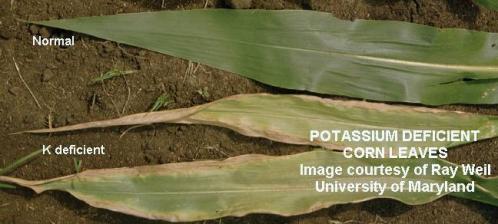
Potassium deficiency on corn (maize) leaves from the bottom of the plant
Note "burned" necrotic leaf edges.
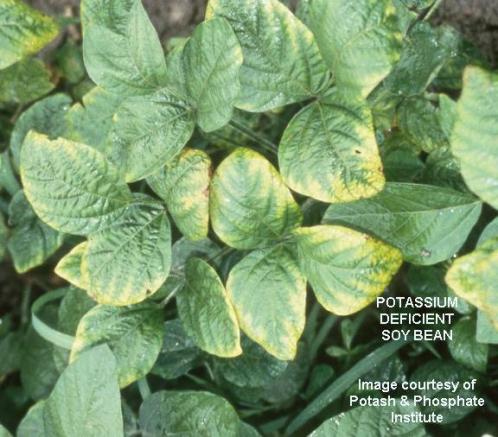
Potassium deficiency on soybean
Note chlorosis (and later necrosis) of edges of older leaves.
Sulfur
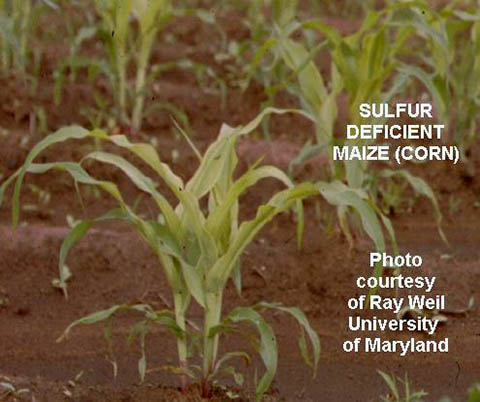
Sulfur deficiency on corn (maize)
Note general chlorosis and spindling growth, with most chlorosis on newer leaves.
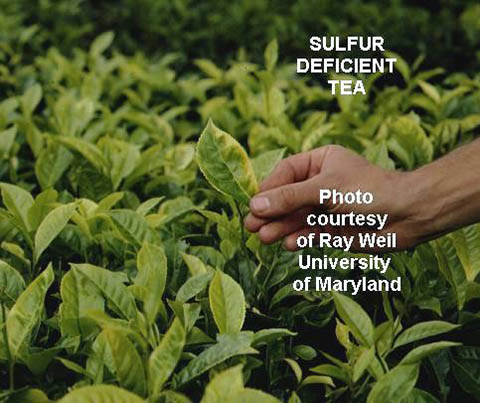
Sulfur on tea bush
Note the yellowish color (chlorosis) on almost all of the youngest (uppermost) leaves.
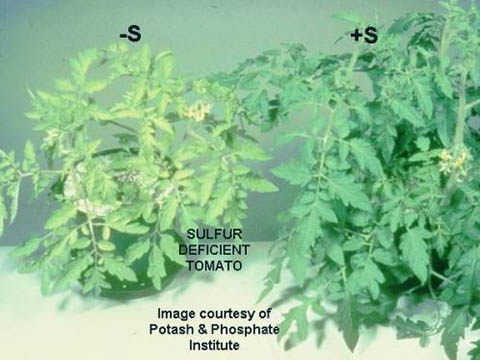
Sulfur on tomato
Note stunted growth and yellowish color compared to normal plant. Chlorosis most pronounced on younger leaves.
Zinc
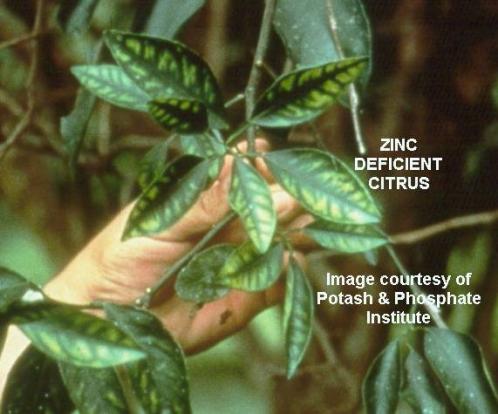
Zinc deficiency on citrus tree
Note "blotchy" Interveinal chlorosis on young leaves. Often also causes a rosette-like whirl of stunted leaves in a symptom called "little leaf".
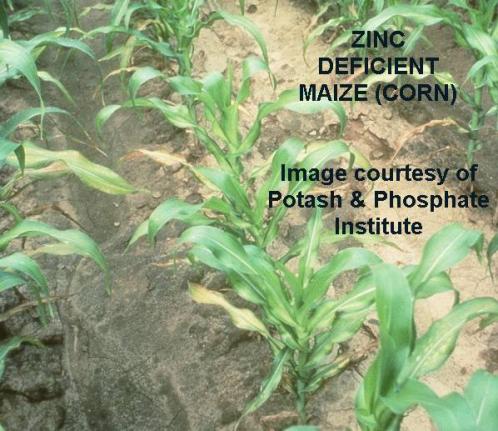
Zinc on corn (maize)
Note the broad band of whitish or chlorotic tissue on either side of the mid-rib, especially on mature leaves.
